Our Location
5th Floor, Huake Center, Lanshan District, Linyi City, Shandong Province, China

5th Floor, Huake Center, Lanshan District, Linyi City, Shandong Province, China
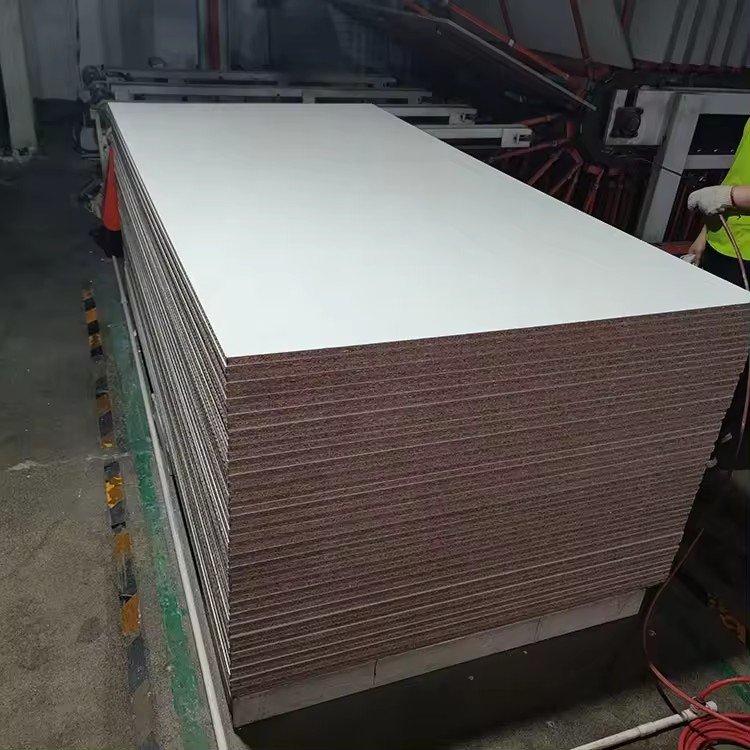
When you search for a plywood sheet, what you actually need depends on a handful of numbers: thickness, face grade, and core construction. A 4×8 panel can serve as framing sheathing, cabinet backing, or concrete formwork, and those jobs want very different boards. This guide covers standard sheet sizes, the meaning of thickness and grade markings, and how to match a sheet to a use so your order arrives correct.
Most plywood sells in full sheets, and the nominal dimensions stay the same whether you buy from a lumberyard or an import container. The typical North American panel measures 4 feet by 8 feet, which equals 1220 by 2440 millimeters, and that footprint dominates framing, flooring, and furniture work. European and Asian mills regularly produce 1220 x 2440 mm panels as well, so the two measurement systems describe the same sheet.
The standard width and length trace back to building framing: wall studs at 16-inch spacing and joists at 16 or 24 inches line up cleanly with a 4-foot-wide panel. That compatibility is what keeps the size on virtually every job site. Half sheets, quarter sheets, and cut-to-size boards exist, but they carry a premium because the mill or distributor has to split a full sheet and dispose of the offcut.
If you buy outside North America, you will still meet 1220 x 2440 mm sheets, but some regions also stock 1250 x 2500 mm boards. A 1250 mm panel fits different joinery patterns and often appears in cabinet production. Before you design a layout, confirm the exact panel footprint the supplier stocks; assuming 1220 mm when the mill cuts 1250 mm changes your yield plan.
A plywood sheet is never exactly the nominal size. Sanded panels run a fraction under the stated dimension, so a sheet sold as 18 mm typically measures 17.5 to 17.8 mm. That tolerance matters for joinery and reveals one reason panels from two suppliers look alike but behave differently in a router or cabinet saw. Always ask for the actual measured thickness, not just the nominal number.
Thickness is the first decision because it sets load capacity, weight, and price. Common sheets range from 3 mm decorative boards to 24 mm structural panels, and the right pick balances stiffness against cost and handling. Thinner panels flex and work best for lining and decorative faces; thicker boards carry weight and bridge framing gaps.
| Nominal thickness | Common uses | Typical weight per sheet |
|---|---|---|
| 3-6 mm | Cabinets, drawer bottoms, signs, curved work | 10-20 kg |
| 9-12 mm | Shelving, packing, light sheathing | 20-35 kg |
| 15-18 mm | Subfloor, wall sheathing, formwork, furniture | 35-50 kg |
| 21-24 mm | Heavy supports, workshop benches, structural | 50-70 kg |
Weight drives freight more than buyers expect. A container of 18 mm sheets costs noticeably more to ship than the same footprint at 12 mm, so importers often re-check thickness once they see the landed cost. If a job only needs 12 mm, paying for 18 mm wastes both material and freight.
The number of veneer layers inside the sheet sets stability. More, thinner plies produce a flatter board that resists warping and holds screws better. A 18 mm sheet might carry 9, 11, or 13 plies depending on the mill. Panels built from fewer, thicker veneers cost less but tend to cup and check, especially in humid environments.
Structural panels follow nominal sizes with defined tolerances, while decorative panels can drift more. Film faced plywood used for concrete formwork is commonly 18 mm because that thickness balances panel stiffness with the weight crane crews can handle. Melamine faced boards for furniture usually run 15 to 18 mm with a consistent core for clean edge banding.
The letter on a sheet face indicates veneer quality, and it directly affects price and finishing work. An A face has almost no defects and accepts clear finish, while D faces allow knots, patches, and open defects. Buying a higher face than the job needs wastes money, and buying a lower face than the job needs adds sanding and fill work.
Exterior and structural panels often combine grades, such as A-C where one face is clean and the other is utility grade. You pay for the better face, so orient the A side toward the visible surface. Cabinets and furniture use A-B or A-C panels; sheathing rarely needs better than C-D.
The core determines how a plywood sheet behaves under load, moisture, and fasteners. Veneer core panels use layers of solid wood and offer the best strength-to-weight balance for most construction. MDF and particleboard cores give a flatter, denser surface that machines cleanly for furniture but adds weight and holds screws less reliably over repeated use.
Veneer core plywood keeps the classic stiffness and is the safe default for structural work. Fiberboard cores are popular in melamine faced panels because the dense surface keeps laminated film flat and edge banding tidy. If the panel will carry weight on edge, choose veneer core; if the panel is a cabinet face, fiberboard core often performs better on CNC routing.
The adhesive inside the sheet decides whether a plywood sheet can face outdoor conditions. Interior grade panels use glue that holds in dry environments, while exterior and marine grades use weather-proof adhesive. A sheet marked exterior with a weak bond will still fail in standing water; check the bond class along with the face grade.
Marine grade adds another requirement beyond waterproof glue: carefully selected veneers with limited internal voids. Those voids give moisture a path through the panel, so a so-called marine sheet that allows core gaps will delaminate even with good adhesive. Read the bond class and void rules together instead of trusting the word marine on the label.
Start with the environment, then the load, then the finish. A dry interior shelf needs a C-D veneer core sheet at 12 mm. A visible cabinet door needs an A-B face at 15-18 mm over a fiberboard core for CNC cutting. A concrete pour needs 18 mm film faced sheets with a defined number of reuses. Writing those three answers down before you call a supplier prevents the most common ordering mistakes.
Freight and waste deserve equal attention. Full 4×8 sheets waste less material when your parts cut cleanly, while cut-to-size boards reduce handling cost but add per-cut fees. Importers usually compare cost per usable square meter, not cost per sheet, because that number reflects both price and yield.
For a first order, ask the supplier four questions: the exact measured thickness, the number of plies, the glue bond class, and the face grade on both sides. The answers reveal the true construction grade behind the marketing name and let you compare quotes on equal terms.
The fastest way to shortlist a sheet is to answer the questions buyers ask most. The points below cover the size, grade, and performance details that usually settle a first order.
The most common plywood sheet measures 4 feet by 8 feet, which is 1220 by 2440 millimeters. Half and quarter sheets exist for convenience, and some markets stock 1250 x 2500 mm panels, so confirm the exact footprint with the supplier before layout.
Use 12 mm for light shelving and packing, 15-18 mm for subfloor, sheathing, and furniture, and 21 mm or more for heavy structural loads. Match thickness to the expected load rather than a rule of thumb.
ACX describes a sheet with an A face, a C back, and exterior glue. It works for any outdoor or high-moisture job where only one face needs a clean appearance.
Generally yes, but core quality matters too. An 18 mm sheet with a weak core can fail before a well-built 15 mm panel, so compare plies and bond class rather than thickness alone.
Yes, with the right panel. Film faced plywood at 18 mm is the standard choice because the smooth overlay releases from concrete cleanly and the panel survives repeated pours; standard sheathing will not.
If you are sourcing panels for a specific build, share your application and load details, and we can match the right core, thickness, and face grade from our plywood range. As a manufacturer, HYY exports commercial plywood, film faced boards, melamine panels, chipboard, and MDF, and we can cut to size for production runs. Review our commercial plywood options or check the melamine faced panels for furniture work, plus film faced sheets for formwork. For interior core panels, MDF board and chipboard complete the range at our complete plywood product lineup.