Our Location
5th Floor, Huake Center, Lanshan District, Linyi City, Shandong Province, China

5th Floor, Huake Center, Lanshan District, Linyi City, Shandong Province, China
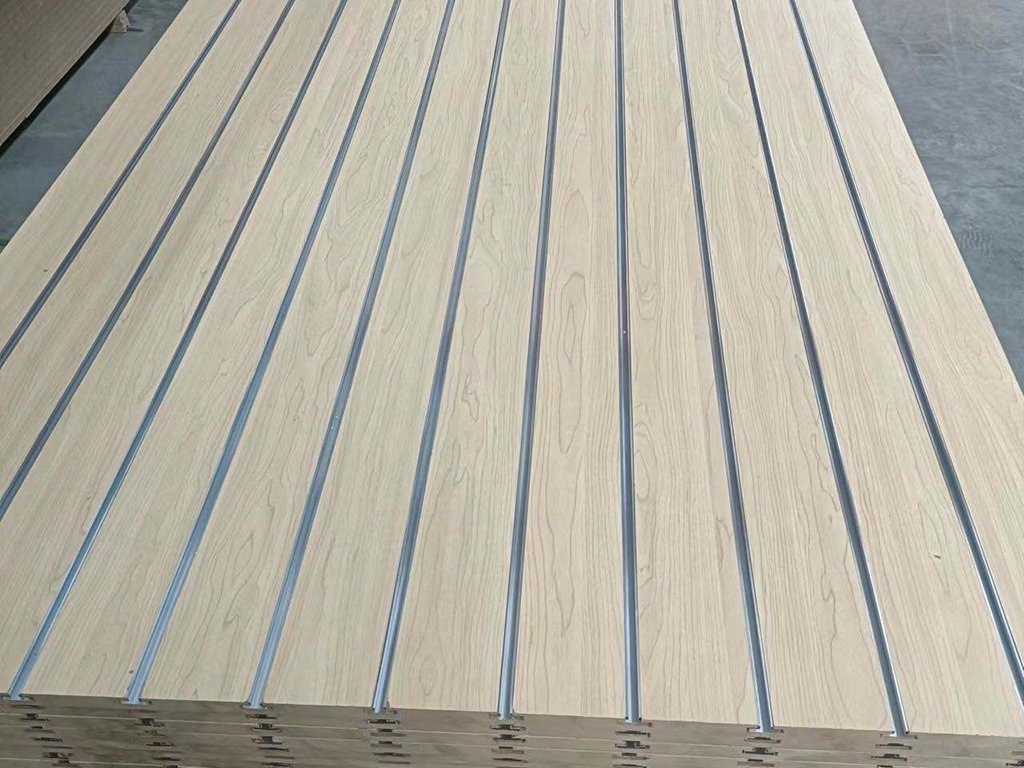
Choosing a plywood size is a two-step decision: pick the footprint, then confirm the thickness. Both numbers look simple on a price list, but nominal dimensions rarely match the measured board. This guide walks through standard plywood sizes, the difference between what a label says and what a caliper shows, and how thickness changes the panel you actually need.
Most global suppliers quote plywood in two systems that describe the same sheet. A 4 by 8 foot panel equals 1220 by 2440 millimeters, and the metric version is what you see on the majority of export orders. The footprint dominates construction because wall studs and floor joists sit at 16 or 24-inch spacing, which the 4-foot width divides cleanly. When a buyer writes “4×8 plywood” or “1220 x 2440 plywood,” they are asking for the same board from two measurement traditions.
Beyond the 1220 x 2440 mm standard, some mills offer 1250 x 2500 mm panels aimed at cabinet production and some European furniture lines. The extra 30 mm of width changes cut nesting, so a shop that designs around 1250 mm cannot simply swap to 1220 mm stock. Confirm the footprint in your region before you set up a cutting layout, because changing it later wastes both sheet area and setup time.
Half sheets at 1220 x 1220 mm and quarter sheets at 610 x 1220 mm ship for small jobs and hand carry. They cost more per square meter because each split leaves an offcut that the supplier must absorb. For container volume, full sheets always pack denser than halves, which is why importers prefer full 1220 x 2440 mm panels even when the final shop cuts them down.
A plywood sheet is labeled by its nominal dimension, but the finished panel runs slightly smaller. A board sold as 18 mm commonly measures 17.5 to 17.8 mm after sanding. The same pattern appears in the footprint: sanded edges and trimming can bring a 1220 mm panel a few millimeters under nominal. These tolerances are a normal part of plywood production, not a sign that the supplier shorted the order.
This gap becomes critical only when the panel must fit a fixed opening, dado, or sliding drawer, because a 0.5 mm difference accumulates across several parts. Ask the supplier for the measured tolerance table before a precision job, and request the actual caliper reading if your cut list depends on tight fits.
| Nominal size | Typical measured size | Common use |
|---|---|---|
| 3-6 mm | 2.8-5.8 mm | Lining, drawer bottoms, curved panels |
| 9-12 mm | 8.5-11.7 mm | Shelving, packing, light sheathing |
| 15-18 mm | 14.5-17.8 mm | Subfloor, framing, furniture, formwork |
| 21-24 mm | 20.5-23.5 mm | Heavy structural panels, benches |
Thickness drives stiffness, weight, and price, so it deserves more attention than the footprint. A 12 mm sheet bends under a heavy shelf load, while an 18 mm sheet handles the span easily but weighs more and costs more to ship. Matching thickness to load saves money without risking failure, which is why experienced buyers list thickness before they discuss finishing or grade.
Ply count sits behind thickness as the stability factor. A 18 mm sheet built with 13 plies resists warping better than a 9-ply board of the same thickness, and it holds screws more securely. If the panel spans a large area or sees moisture, ask for the ply count rather than accepting a cheap core.
Plywood expands and contracts with moisture, and the movement is smallest along the length of the sheet and largest across its width. Panels that must sit side by side should allow a small expansion gap rather than being forced tight at installation. Edge banding on melamine faced boards controls this movement and seals the core, which is why furniture panels are usually supplied with a banded edge when the buyer asks for a finished look.
Veneer core panels stay the norm for structural use because layer upon layer of solid wood resists bending and holds fasteners. MDF and particleboard cores produce a flatter, denser surface that machines cleanly for furniture, but they weigh more for the same thickness and grip screws less over repeated pulls. Choosing between them usually comes down to whether the panel carries edge load or sits flat as a cabinet face.
Footprint and thickness interact in freight. A 40-foot container holds more 12 mm sheets than 18 mm panels because weight, not volume, usually caps the load. Importers who switch from 18 mm to 15 mm to fit more units should first confirm the application tolerates the thinner board, because the shipping saving disappears if the panel fails on site.
Custom sheet sizes reduce waste when a production line uses a repeated part. Supplying the supplier a cut list allows better nesting, so fewer full sheets become scrap. The trade-off is a per-cut fee and slower handling, which matters only when a single panel size repeats across a large order. For a one-off job, buying full sheets and cutting on site usually costs less.
Two sheets of the same size can still differ in grade, and grade changes cost more than dimension does. An A face accepts clear finish with little repair, while a C face allows knots and patches that need filling on visible work. When a cabinet calls for a clean appearance, paying for a B face beats ordering a C panel and sanding it into shape, because the extra labour usually exceeds the price gap.
Ask four questions before purchase: the exact footprint in millimeters, the measured thickness, the number of plies, and the face grade on both sides. Together these define the panel regardless of marketing names. A supplier who answers with clear numbers is comparing honestly; one who only repeats the label is quoting nominal values.
Next, match the size to the visible finish and environment. Interior furniture wants 15-18 mm with a smooth face and tight core; exterior framing wants an exterior bond class regardless of thickness; concrete forming wants 18 mm film faced sheets with a defined reuse count. State the environment first, because it decides the glue and face before thickness ever matters.
These questions cover the decisions that delay most orders: standard dimensions, load limits, and custom cutting. The short answers below help you move quickly to a confirmed specification.
1220 x 2440 mm (4 x 8 ft) is the export standard. It fits a 40-foot container well, divides into common parts, and matches North American framing layouts.
Plywood usually keeps the sheet label down to 2 x 2 ft panels. Below that, suppliers sell cut parts rather than sheets, and per-piece pricing applies.
18 mm with a dense core is the common furniture standard. If the piece carries heavy loads on long spans, step up to 21 mm or reinforce the structure instead of choosing cheaper thin board.
Yes, mills cut custom panels from full sheets. Provide a cut list so the supplier can nest parts efficiently and reduce waste fees.
Load depends on span, framing, and core. On 16-inch framing, 18 mm sheathing carries typical residential floor loads; on wide spans, deflection limits the safe load far below the panel’s raw strength.
Finishing thickness matters at the working edge. A panel that will receive veneer, lamination, or paint still keeps its structural size, but sanding and coating remove a fraction of the face. Veneer faced and melamine panels are the only sheets where the overlay, not the wood, defines the visible surface, so order those by their finished face thickness rather than by core size alone.
Convert every quote to cost per usable square meter at the measured thickness. A cheaper list price on a thinner sheet can vanish once freight, waste, and stiffness are added, while a slightly higher price on 18 mm often wins when the panel must span framing without extra support. Keeping the comparison unit consistent removes the confusion that nominal sizes create.
Send us your application and a cut list, and we will confirm the right plywood size, measured thickness, and core for production. As a manufacturer, HYY exports commercial plywood, film faced panels, melamine boards, chipboard, and MDF in standard and cut-to-size formats. Compare our commercial plywood for construction, review film faced sheets for formwork, and see melamine faced panels for furniture; MDF board and chipboard fill out the rest of the range at our complete plywood product lineup.